Borscht Recipes: Two Bold Ways to Master the Classic Beet Soup
Few soups carry the kind of depth and soul that borscht does. Born from Eastern European tradition, this beet-based dish has earned its place at tables across the world — not just for its striking crimson color, but for the rich, earthy flavor that hits different on a cold night. Whether you prefer it hot and hearty or chilled and refreshing, borscht is one of those recipes that rewards patience and rewards well Below are two takes on this iconic soup, each one a reminder of why the classics never really go out of style.
Classic Borscht: A Warmingeet Soup Built for Cold Days

This is the borscht that fills kitchen with warmth before even hits the bowl. Deepeet flavor layered with cabbage, tender beef, and a sharp finish of vinegar — it is the kind of soup that tastes even better the next day. Dark, complex, and unapologetically bold version everything proper borscht should be.
- 1 lb chuck, cut into chunks
- 3 medium beets, peeled and grated
- 2 cups green cabbage, shredded
- 2 medium carrots, g>1 large onion, diced
- 3 cloves garlic, minced
- 2 medium potatoes, peeled and cubed
- 1 can (14 oz) diced tomatoes
- 6 cups beef broth
- 2 tablespoons tomato paste
- 2 tablespoons red wine vinegar
- 2 tablespoons vegetable oil
- Salt black pepper, and bay leaves to taste
- Sour cream and fresh dill for serving
- Heat oil in a large pot over medium-high heat. Add the beef chunks and sear on all sides until browned. Remove and set aside.
- In the same pot, sauté the onion until translucent, about 4 minutes. Add garlic and cook for another minute.
- Stir in the grated carrots and cook for 3 minutes, then add the tomato paste and diced tomatoes. Cook for 5 more minutes until the mixture darkens slightlyReturn the beef to the pot. Pour in the beef broth and bring to a boil. Add bay leaves, reduce heat, and simmer for 45 minutes.
- Add the grated beets, cubed potatoes, and shredded cabbage. Continue simmering for another 25 minutes until all vegetables are tender.
- Stir in the red wine vinegar. Season generously with salt and black pepper. Taste and adjust as needed.
- Remove bay leaves. Ladle into bowls and finish with a dollop of sour cream and a scattering of fresh dill.
Chilled Russian Borscht: The Cold Version That Earns Its Place
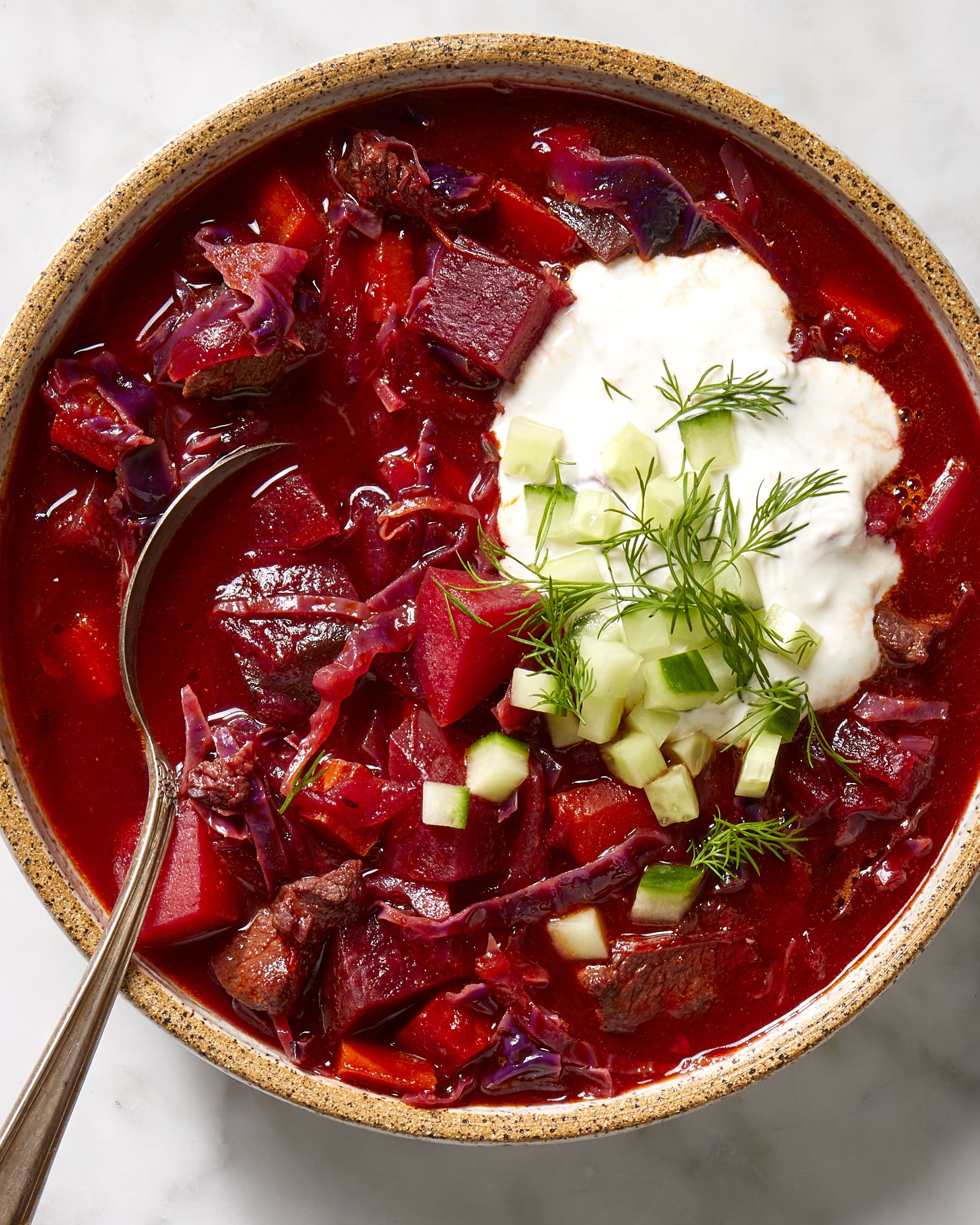
Cold borscht is not compromise — a deliberate choice. Served chilled, this version strips down to its sharpest edges: clean flavor, crisp vegetables, and a cooling finish that makes it a serious contender in warmer months. It takes restraint to do it right, and result is something precise and satisfying in way that the hot version simply cannot replicate.
- 4 beets, roasted or boiled until tender
- 4 cups vegetable or chicken broth, chilled
- 1 cup kefir or buttermilk , finely diced
- 3 hard-boiled eggs, halved
- 4 radishes, thinly sliced tablespoons fresh lemon juice
- 1 tablespoon white wine vinegar and white pepper to taste
- Fresh dill and sour cream for garnish
- Peel and grate or finely chop the cooked beets. Reserve any roasting or cooking juices — they add color and depth. Combine the beets their juices with the chilled broth in a large bowl. Stir in the kefir or buttermilk until fully incorporatedAdd the lemon juice and white vinegar. Season with salt, white pepper, and sugar if using.ir well
- Cover bowl and refrigerate for at least 2 hours. The flavor sharpens and the color deepens as it chills.
- Once thoroughly, ladle into bowls. Arrange the diced cucumber, sliced radishes, and hard-boiled egg halves directly in each bowl.
- Finish with a generous spoonful of sour cream and fresh dill. Serve immediately while still cold.